The Role of Max Velocity in Athletic Development
Top-end speed is not simply about sprinting faster—it’s about enhancing the athlete’s overall performance ceiling. By developing maximum velocity, we expand the speed reserve, the differential between maximum sprint speed and in-game or submaximal speeds.
A greater speed reserve translates directly into tactical advantages: the ability to sustain high-intensity efforts longer, recover faster between plays, and execute repeated sprints with less fatigue. For field and court athletes, top speed training is an essential stimulus for nervous system efficiency, elastic power, and mechanical precision.
Max velocity training is a critical component of elite performance development for student athletes. This guide explains how high school and college athletes can improve top-end speed, stride efficiency, and explosiveness through structured, sport-specific training.
Power Development: Priming Elastic and Neuromuscular Systems 💥
Each session begins by targeting the neuromuscular and elastic components that underpin high-speed performance.
Pogos and Consecutive Hurdle Hops train ankle stiffness and reactive force application—key elements for force transmission during upright sprinting.
Bounding extends this stimulus horizontally, reinforcing cyclical power production and rhythm across multiple ground contacts.
Banded Falling Starts tether these qualities to the early acceleration phase, integrating elastic energy with projection and alignment.
This sequence transitions athletes from general elastic activation to specific force application under high-velocity conditions.
Technique & Mechanics: Refining the Sprint Model 🛠️
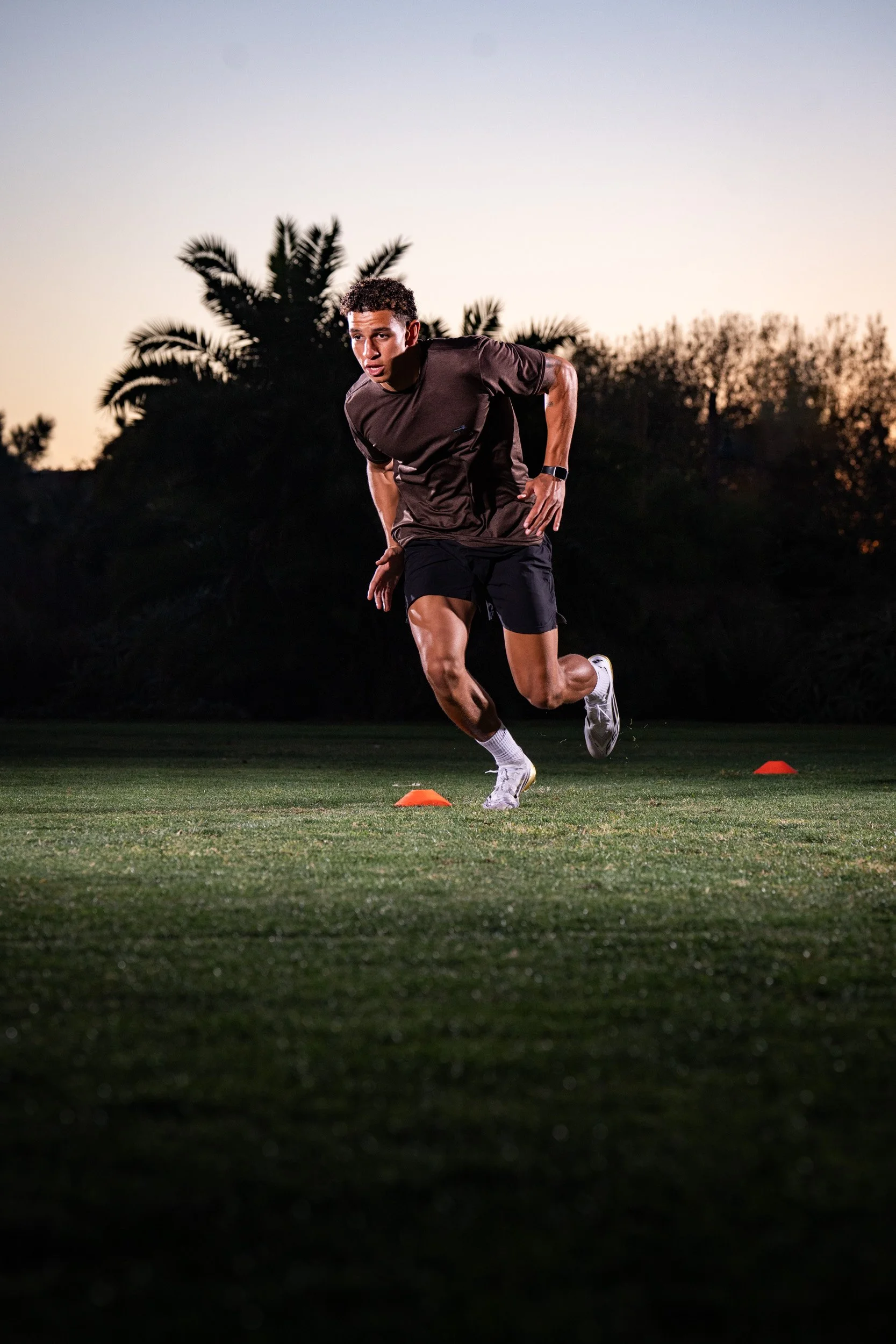
Technical efficiency is the bridge between power development and consistent top-end performance. The mechanical portion of the session focused on front-side mechanics—critical for front-foot positioning, force direction, and upright posture.
The progression began with marching and skipping patterns, establishing coordination and posture control.
High-knee runs were used to elevate frequency and reinforce hip flexor speed under dynamic conditions.
Dowel runs introduced an external cue for posture, guiding athletes to maintain tall alignment and optimal front-side engagement without overstriding.
This methodical sequencing engrains dynamic posture and reinforces the technical consistency required for max velocity sprinting.
Speed Development: Translating Mechanics to Measurable Output ⚡
The final phase integrated these qualities into timed sprint exposures.
Build-ups (10-yard acceleration + 20-yard sprint) allowed a controlled transition into upright mechanics, gradually increasing intensity.
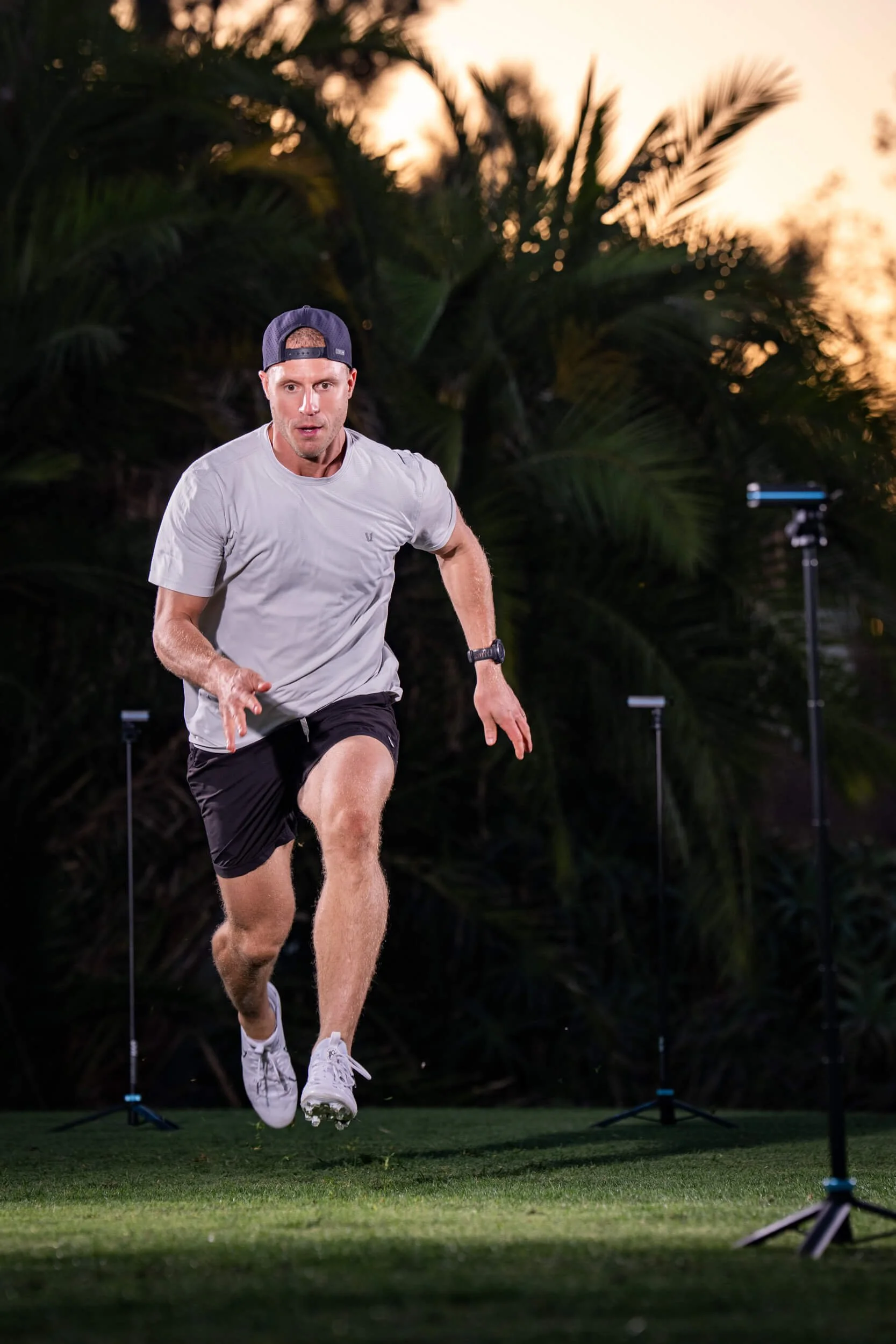
Timed Flying 10s served as the primary output measure—providing objective feedback on max velocity and enabling longitudinal tracking through timing gates or electronic systems.
By anchoring technical precision to quantifiable outcomes, athletes learn to connect their movement efficiency directly to performance metrics.
Final Takeaway
Training max velocity isn’t just about “running fast.” It’s a systematic process that develops neuromuscular efficiency, posture control, and elastic reactivity—qualities that enhance both sprint performance and overall athletic durability.
This structured approach ensures each rep serves a purpose: build intent, refine movement, and move closer to the athlete’s true speed potential.